Information is an abstract concept that refers to something which has the power to inform. At the most fundamental level, it pertains to the interpretation (perhaps formally) of that which may be sensed, or their abstractions. Any natural process that is not completely random and any observable pattern in any medium can be said to convey some amount of information. Whereas digital signals and other data use discrete signs to convey information, other phenomena and artifacts such as analogue signals, poems, pictures, music or other sounds, and currents convey information in a more continuous form. Information is not knowledge itself, but the meaning that may be derived from a representation through interpretation. The concept of information is relevant to and connected with various concepts, including constraint, communication, control, data, form, education, knowledge, meaning, understanding, mental stimuli, pattern, perception, proposition, representation, and entropy. Information is often processed iteratively: Data available at one step are processed into information to be interpreted and processed at the next step. For example, in written text each symbol or letter conveys information relevant to the word it is part of, each word conveys information relevant to the phrase it is part of, each phrase conveys information relevant to the sentence it is part of, and so on until at the final step information is interpreted and becomes knowledge in a given domain. In a digital signal, bits may be interpreted into the symbols, letters, numbers, or structures that convey the information available at the next level up. The key characteristic of information is that it is subject to interpretation and processing. The derivation of information from a signal or message may be thought of as the resolution of ambiguity or uncertainty that arises during the interpretation of patterns within the signal or message. Information may be structured as data. Redundant data can be compressed up to an optimal size, which is the theoretical limit of compression. The information available through a collection of data may be derived by analysis. For example, a restaurant collects data from every customer order. That information may be analyzed to produce knowledge that is put to use when the business subsequently wants to identify the most popular or least popular dish. Information can be transmitted in time, via data storage, and space, via communication and telecommunication. Information is expressed either as the content of a message or through direct or indirect observation. That which is perceived can be construed as a message in its own right, and in that sense, all information is always conveyed as the content of a message. Information can be encoded into various forms for transmission and interpretation (for example, information may be encoded into a sequence of signs, or transmitted via a signal). It can also be encrypted for safe storage and communication. The uncertainty of an event is measured by its probability of occurrence. Uncertainty is proportional to the negative logarithm of the probability of occurrence. Information theory takes advantage of this by concluding that more uncertain events require more information to resolve their uncertainty. The bit is the standard unit of information. It is 'that which reduces uncertainty by half'. Other units such as the nat may be used. For example, the information encoded in one "fair" coin flip is log2(2/1) = 1 bit, and in two fair coin flips is log2(4/1) = 2 bits. A 2011 Science article estimates that 97% of technologically stored information was already in digital bits in 2007 and that the year 2002 was the beginning of the digital age for information storage (with digital storage capacity bypassing analogue for the first time). == Etymology and history of the concept == The English word "information" comes from Middle French enformacion/informacion/information 'a criminal investigation' and its etymon, Latin informatiō(n) 'conception, teaching, creation'. In English, "information" is an uncountable mass noun. References on "formation or molding of the mind or character, training, instruction, teaching" date from the 14th century in both English (according to Oxford English Dictionary) and other European languages. In the transition from Middle Ages to Modernity the use of the concept of information reflected a fundamental turn in epistemological basis – from "giving a (substantial) form to matter" to "communicating something to someone". Peters (1988, pp. 12–13) concludes: Information was readily deployed in empiricist psychology (though it played a less important role than other words such as impression or idea) because it seemed to describe the mechanics of sensation: objects in the world inform the senses. But sensation is entirely different from "form" – the one is sensual, the other intellectual; the one is subjective, the other objective. My sensation of things is fleeting, elusive, and idiosyncratic. For Hume, especially, sensory experience is a swirl of impressions cut off from any sure link to the real world... In any case, the empiricist problematic was how the mind is informed by sensations of the world. At first informed meant shaped by; later it came to mean received reports from. As its site of action drifted from cosmos to consciousness, the term's sense shifted from unities (Aristotle's forms) to units (of sensation). Information came less and less to refer to internal ordering or formation, since empiricism allowed for no preexisting intellectual forms outside of sensation itself. Instead, information came to refer to the fragmentary, fluctuating, haphazard stuff of sense. Information, like the early modern worldview in general, shifted from a divinely ordered cosmos to a system governed by the motion of corpuscles. Under the tutelage of empiricism, information gradually moved from structure to stuff, from form to substance, from intellectual order to sensory impulses. In the modern era, the most important influence on the concept of information is derived from the Information theory developed by Claude Shannon and others. This theory, however, reflects a fundamental contradiction. Northrup (1993) wrote: Thus, actually two conflicting metaphors are being used: The well-known metaphor of information as a quantity, like water in the water-pipe, is at work, but so is a second metaphor, that of information as a choice, a choice made by :an information provider, and a forced choice made by an :information receiver. Actually, the second metaphor implies that the information sent isn't necessarily equal to the information received, because any choice implies a comparison with a list of possibilities, i.e., a list of possible meanings. Here, meaning is involved, thus spoiling the idea of information as a pure "Ding an sich." Thus, much of the confusion regarding the concept of information seems to be related to the basic confusion of metaphors in Shannon's theory: is information an autonomous quantity, or is information always per SE information to an observer? Actually, I don't think that Shannon himself chose one of the two definitions. Logically speaking, his theory implied information as a subjective phenomenon. But this had so wide-ranging epistemological impacts that Shannon didn't seem to fully realize this logical fact. Consequently, he continued to use metaphors about information as if it were an objective substance. This is the basic, inherent contradiction in Shannon's information theory." (Northrup, 1993, p. 5). In their seminal book The Study of Information: Interdisciplinary Messages, Almach and Mansfield (1983) collected key views on the interdisciplinary controversy in computer science, artificial intelligence, library and information science, linguistics, psychology, and physics, as well as in the social sciences. Almach (1983, p. 660) himself disagrees with the use of the concept of information in the context of signal transmission, the basic senses of information in his view all referring "to telling something or to the something that is being told. Information is addressed to human minds and is received by human minds." All other senses, including its use with regard to nonhuman organisms as well to society as a whole, are, according to Machlup, metaphoric and, as in the case of cybernetics, anthropomorphic. Hjørland (2007) describes the fundamental difference between objective and subjective views of information and argues that the subjective view has been supported by, among others, Bateson, Yovits, Span-Hansen, Brier, Buckland, Goguen, and Hjørland. Hjørland provided the following example: A stone on a field could contain different information for different people (or from one situation to another). It is not possible for information systems to map all the stone's possible information for every individual. Nor is any one mapping the one "true" mapping. But peop
Vector database
A vector database, vector store or vector search engine is a database that stores and retrieves embeddings of data in vector space. Vector databases typically implement approximate nearest neighbor algorithms so users can search for records semantically similar to a given input, unlike traditional databases which primarily look up records by exact match. Use-cases for vector databases include similarity search, semantic search, multi-modal search, recommendations engines, object detection, and retrieval-augmented generation (RAG). Vector embeddings are mathematical representations of data in a high-dimensional space. In this space, each dimension corresponds to a feature of the data, with the number of dimensions ranging from a few hundred to tens of thousands, depending on the complexity of the data being represented. Each data item is represented by one vector in this space. Words, phrases, or entire documents, as well as images, audio, and other types of data, can all be vectorized. These feature vectors may be computed from the raw data using machine learning methods such as feature extraction algorithms, word embeddings or deep learning networks. The goal is that semantically similar data items receive feature vectors close to each other. Vector retrieval can be combined with metadata filtering or lexical search to support filtered and hybrid retrieval workflows. == Techniques == Common techniques for similarity search on high-dimensional vectors include: Hierarchical Navigable Small World (HNSW) graphs Locality-sensitive hashing (LSH) and sketching Product quantization (PQ) Inverted files These techniques may also be combined in vector search systems. In recent benchmarks, HNSW-based implementations have been among the best performers. Conferences such as the International Conference on Similarity Search and Applications (SISAP) and the Conference on Neural Information Processing Systems (NeurIPS) have hosted competitions on vector search in large databases. == Applications == Vector databases are used in a wide range of machine learning applications including similarity search, semantic search, multi-modal search, recommendations engines, object detection, and retrieval-augmented generation. === Retrieval-augmented generation === An especially common use-case for vector databases is in retrieval-augmented generation (RAG), a method to improve domain-specific responses of large language models. The retrieval component of a RAG can be any search system, but is most often implemented as a vector database. Text documents describing the domain of interest are collected, and for each document or document section, a feature vector (known as an "embedding") is computed, typically using a deep learning network, and stored in a vector database along with a link to the document. Given a user prompt, the feature vector of the prompt is computed, and the database is queried to retrieve the most relevant documents. These are then automatically added into the context window of the large language model, and the large language model proceeds to create a response to the prompt given this context. == Implementations ==
Rabbit r1
The Rabbit r1 is an artificial intelligence personal assistant device developed by the American technology startup Rabbit Inc and co-designed by Teenage Engineering. It was announced at the 2024 Consumer Electronics Show as a handheld device intended to perform digital tasks through voice commands, touch interaction, and web-based AI agents. The r1 was marketed around Rabbit's concept of a "large action model" (LAM), which the company described as software able to operate websites and services on behalf of users. The device runs rabbitOS, an operating system based on the Android Open Source Project. Its services have included AI search, image recognition, voice interaction, music playback, rideshare and food-ordering integrations, and later experimental web-agent features such as LAM Playground and teach mode. Initial reviews were largely negative, with reviewers criticizing the device's limited functionality, bugs, and unclear advantages over a smartphone. Critics also questioned Rabbit's claims after the r1 software was shown to run on an Android phone. Rabbit continued to issue software updates after launch, including rabbitOS 2 in September 2025, which introduced a redesigned card-based interface, gesture navigation, and a "creations" feature for generating small software tools and experiences on the device. Rabbit Inc was founded by Jesse Lyu Cheng. == Hardware == Display: A 2.88-inch touchscreen for interactive user input. Input: push-to-talk button to activate voice commands; scroll wheel; Gyroscope; Magnetometer; Accelerometer; GPS. Camera: 8 MP single camera, with a resolution of 3264x2448, allowing for the connected external AI to use computer vision. Audio: Equipped with a speaker and dual microphones for audio interaction. Connectivity: Supports Wi-Fi and cellular connections via a SIM card slot to access internet services. Processor: Runs on a 2.3GHz MediaTek Helio P35 processor. Memory: Contains 4GB of RAM for operational tasks. Storage: Offers 128GB of internal storage for data. Ports: Utilizes a USB-C port for charging and data connections. == Software == The Rabbit r1 runs rabbitOS, which is based on the Android Open Source Project (AOSP), specifically Android 13. Rabbit founder Jesse Lyu described rabbitOS as a "very bespoke AOSP" after reports that the r1's software could be run on a conventional Android phone. Rabbit described the r1 as using a large action model (LAM), a type of AI agent intended to perform tasks across software interfaces rather than only answer questions. At launch, the device supported a limited set of services, including AI search, vision features, music playback, and some third-party integrations. Perplexity.ai was one of the AI services used to answer user queries. In 2024, Rabbit released several software updates that added features and attempted to address early criticism of the device. In July 2024, the company launched "beta rabbit", an advanced search and conversation mode for more complex queries. In October 2024, it released LAM Playground, a web-based agent feature intended to let the r1 operate websites on behalf of users. Reviewers found the feature experimental; Android Authority reported that it could perform some navigation tasks but struggled with CAPTCHAs, loops, and unintended behavior. In November 2024, Rabbit introduced a beta "teach mode", which allowed users to demonstrate web-based tasks in the Rabbithole web portal and later ask the r1 to repeat them. The company described teach mode as experimental, and The Verge noted that Rabbit warned users that results could be unpredictable and that CAPTCHA-protected sites could cause problems. Rabbit released rabbitOS 2 in September 2025. The update redesigned the interface around a card-based layout, added additional touchscreen gestures, and introduced "creations", a feature that lets users generate simple software tools, games, and interfaces through natural-language prompts. Coverage of the update described it as a major software overhaul rather than new hardware. == Reception == === Funding === Rabbit raised $20 million in funding from Khosla Ventures, Synergis Capital and Kakao Investment in October 2023. The company announced an additional $10 million in funding in December 2023. === Sales === Following its announcement at the 2024 Consumer Electronics Show, 130,000 units were sold. On August 13, 2024, Rabbit announced that sales of r1 had expanded to the entire European Union (except Malta) and United Kingdom. On August 21, 2024, sales of r1 expanded to Singapore. === Reviews === The r1 was met with strong criticism immediately after Rabbit began shipping the device. Some reviews questioned what the device was able to do that a smartphone could not, while comparing it to the similar Humane Ai Pin. YouTuber Marques Brownlee called the device "barely reviewable". Android Authority's Mishaal Rahman managed to install Rabbit r1's software on a Pixel 6a smartphone, after a tipster shared an APK file. The Verge echoed the claims made by Rahman. In response, Lyu published statements confirming its use of Android, but denying that the r1 is an Android app. Mashable called its Vision features impressive, but said that "these praise-worthy features are overshadowed by buggy performance". Ars Technica wrote a blog post claiming "the company is blocking access from bootleg APKs". TechCrunch gave a slightly more positive review, calling the device a "fun peep at a possible future", but could not "advise anyone to buy one now." Shortly after the launch of r1, Rabbit began a weekly cadence of software updates to address much of the criticism from the early reviews, including "battery and GPS performance, time zone selection, and more". Digital Trends said the Magic Camera feature "takes the most mundane, ordinary, and badly composed photos and makes something fun and eye-catching from them." Mashable said the "beta rabbit" feature "makes Rabbit R1 more conversational and intelligent". Later coverage noted that Rabbit continued to update the r1 after its poorly received launch. The Verge reported in September 2024 that about 5,000 of roughly 100,000 purchasers were using the device at any given moment, citing Lyu, and described the product as having launched before it was ready. In 2025, coverage of rabbitOS 2 described the update as an attempt to reset the device's software experience after the criticism of its original release. == Controversies == === GAMA project === Rabbit Inc has garnered attention due to allegations surrounding its funding and the company's past projects. The company came under scrutiny when Stephen Findeisen, known as Coffeezilla on YouTube, published a video in May 2024, alleging that Rabbit Incorporation was "built on a scam". Rabbit Incorporation, initially named Cyber Manufacturing Co, rebranded just two months before launching the Rabbit R1. The company, under its former name, raised $6 million in November 2021 for a project called GAMA, described as a "Next Generation NFT Project." Jesse Lyu, the CEO of Rabbit Incorporation, referred to GAMA as a "fun little project." Coffeezilla, who investigates influencer scams, highlighted old Clubhouse recordings of Jesse Lyu discussing the GAMA project. In these recordings, Lyu emphasized the substantial funding behind GAMA and its potential to be a revolutionary, carbon-negative cryptocurrency. Coffeezilla questioned the whereabouts of the funds raised for GAMA, estimating that approximately $1 million in refunds to investors remained unresolved. He suggested that the rebranding to Rabbit Incorporation and the shift to developing the Rabbit R1 were attempts to divert from the GAMA project's issues. In response to Coffeezilla's inquiries, Rabbit Incorporation stated that the $6 million raised was used for the GAMA project. The company said that NFTs cannot be refunded unless the owner agrees to "burn" them on the blockchain. Rabbit Incorporation also said that the GAMA project was open-sourced and returned to the community, aligning with community feedback. They also mentioned that efforts to buy back NFTs were made to counteract malicious trading and maintain market stability. === Security === In June 2024, Engadget reported that the Rabbitude team, a community reverse engineering project, had gained access to the r1's codebase revealing that r1's software contained several hardcoded API keys in its code for ElevenLabs, Microsoft Azure, Yelp, and Google Maps, potentially allowing unauthorized access to r1 responses, including those containing the users' personal information. For a short time, Rabbit immediately began revoking and rotating those secrets and confirmed that the code was leaked by an employee who had "been terminated and remains under investigation". In July 2024, the company revealed that all user chats and device pairing data were logged on the r1 with no ability to delete them. This meant that lost or stolen devices could be used to extract user
Artificial brain
An artificial brain (or artificial mind) is software and hardware with cognitive abilities similar to those of the animal or human brain. Research investigating "artificial brains" and brain emulation plays three important roles in science: An ongoing attempt by neuroscientists to understand how the human brain works, known as cognitive neuroscience. A thought experiment in the philosophy of artificial intelligence, demonstrating that it is possible, at least in theory, to create a machine that has all the capabilities of a human being. A long-term project to create machines exhibiting behavior comparable to those of animals with complex central nervous system such as mammals and most particularly humans. The ultimate goal of creating a machine exhibiting human-like behavior or intelligence is sometimes called strong AI. An example of the first objective is the project reported by Aston University in Birmingham, England where researchers are using biological cells to create "neurospheres" (small clusters of neurons) in order to develop new treatments for diseases including Alzheimer's, motor neurone and Parkinson's disease. The second objective is a reply to arguments such as John Searle's Chinese room argument, Hubert Dreyfus's critique of AI or Roger Penrose's argument in The Emperor's New Mind. These critics argued that there are aspects of human consciousness or expertise that can not be simulated by machines. One reply to their arguments is that the biological processes inside the brain can be simulated to any degree of accuracy. This reply was made as early as 1950, by Alan Turing in his classic paper "Computing Machinery and Intelligence". The third objective is generally called artificial general intelligence by researchers. However, Ray Kurzweil prefers the term "strong AI". In his book The Singularity is Near, he focuses on whole brain emulation using conventional computing machines as an approach to implementing artificial brains, and claims (on grounds of computer power continuing an exponential growth trend) that this could be done by 2025. Henry Markram, director of the Blue Brain project (which is attempting brain emulation), made a similar claim (2020) at the Oxford TED conference in 2009. == Approaches to brain simulation == W. Ross Ashby's pioneering work in cybernetics provided an early mathematical framework for understanding adaptive brain-like systems. In his 1952 book Design for a Brain, Ashby proposed that the brain could be modeled as an ultrastable system that maintains equilibrium through continuous adaptation to environmental perturbations. His approach used differential equations and state-space models to describe how neural systems could exhibit purposeful behavior through feedback mechanisms. Ashby's homeostat, a physical machine built in 1948, demonstrated these principles through an electromechanical device with four interconnected units that automatically adjusted their parameters to maintain stability when disturbed. The homeostat represented one of the first attempts to build an artificial system exhibiting brain-like adaptive behavior, influencing subsequent work in adaptive systems, neural networks, and artificial intelligence. Although direct human brain emulation using artificial neural networks on a high-performance computing engine is a commonly discussed approach, there are other approaches. An alternative artificial brain implementation could be based on Holographic Neural Technology (HNeT) non linear phase coherence/decoherence principles. The analogy has been made to quantum processes through the core synaptic algorithm which has strong similarities to the quantum mechanical wave equation. EvBrain is a form of evolutionary software that can evolve "brainlike" neural networks, such as the network immediately behind the retina. In November 2008, IBM received a US$4.9 million grant from the Pentagon for research into creating intelligent computers. The Blue Brain project is being conducted with the assistance of IBM in Lausanne. The project is based on the premise that it is possible to artificially link the neurons "in the computer" by placing thirty million synapses in their proper three-dimensional position. Some proponents of strong AI speculated in 2009 that computers in connection with Blue Brain and Soul Catcher may exceed human intellectual capacity by around 2015, and that it is likely that we will be able to download the human brain at some time around 2050. While Blue Brain is able to represent complex neural connections on the large scale, the project does not achieve the link between brain activity and behaviors executed by the brain. In 2012, project Spaun (Semantic Pointer Architecture Unified Network) attempted to model multiple parts of the human brain through large-scale representations of neural connections that generate complex behaviors in addition to mapping. Spaun's design recreates elements of human brain anatomy. The model, consisting of approximately 2.5 million neurons, includes features of the visual and motor cortices, GABAergic and dopaminergic connections, the ventral tegmental area (VTA), substantia nigra, and others. The design allows for several functions in response to eight tasks, using visual inputs of typed or handwritten characters and outputs carried out by a mechanical arm. Spaun's functions include copying a drawing, recognizing images, and counting. There are good reasons to believe that, regardless of implementation strategy, the predictions of realising artificial brains in the near future are optimistic. In particular brains (including the human brain) and cognition are not currently well understood, and the scale of computation required is unknown. Another near term limitation is that all current approaches for brain simulation require orders of magnitude larger power consumption compared with a human brain. The human brain consumes about 20 W of power, whereas current supercomputers may use as much as 1 MW—i.e., an order of 100,000 more. == Artificial brain thought experiment == Some critics of brain simulation believe that it is simpler to create general intelligent action directly without imitating nature. Some commentators have used the analogy that early attempts to construct flying machines modeled them after birds, but that modern aircraft do not look like birds.
MLOps
MLOps or ML Ops is a paradigm that aims to deploy and maintain machine learning models in production reliably and efficiently. It bridges the gap between machine learning development and production operations, ensuring that models are robust, scalable, and aligned with business goals. The word is a compound of "machine learning" and the continuous delivery practice (CI/CD) of DevOps in the software field. Machine learning models are tested and developed in isolated experimental systems. When an algorithm is ready to be launched, MLOps is practiced between data scientists, DevOps, and machine learning engineers to transition the algorithm to production systems. Similar to DevOps or DataOps approaches, MLOps seeks to increase automation and improve the quality of production models, while also focusing on business and regulatory requirements. While MLOps started as a set of best practices, it is slowly evolving into an independent approach to ML lifecycle management. MLOps applies to the entire lifecycle - from integrating with model generation (software development lifecycle, continuous integration/continuous delivery), orchestration, and deployment, to health, diagnostics, governance, and business metrics. == Definition == MLOps is a paradigm, including aspects like best practices, sets of concepts, as well as a development culture when it comes to the end-to-end conceptualization, implementation, monitoring, deployment, and scalability of machine learning products. Most of all, it is an engineering practice that leverages three contributing disciplines: machine learning, software engineering (especially DevOps), and data engineering. MLOps is aimed at productionizing machine learning systems by bridging the gap between development (Dev) and operations (Ops). Essentially, MLOps aims to facilitate the creation of machine learning products by leveraging these principles: CI/CD automation, workflow orchestration, reproducibility; versioning of data, model, and code; collaboration; continuous ML training and evaluation; ML metadata tracking and logging; continuous monitoring; and feedback loops. == History == Interest in operationalizing machine learning systems began to grow in the mid-2010s as ML projects started moving from experimentation to production use. The challenges associated with sustaining such systems were highlighted in a 2015 paper. The predicted growth in machine learning included an estimated doubling of ML pilots and implementations from 2017 to 2018, and again from 2018 to 2020. Reports show a majority (up to 88%) of corporate machine learning initiatives are struggling to move beyond test stages. However, those organizations that actually put machine learning into production saw a 3–15% profit margin increases. The MLOps market size was USD 2,191.8 Million in 2024, and is projected to be USD 16,613.4 Million in 2030. == Architecture == Machine Learning systems can be categorized in eight different categories: data collection, data processing, feature engineering, data labeling, model design, model training and optimization, endpoint deployment, and endpoint monitoring. Each step in the machine learning lifecycle is built in its own system, but requires interconnection. These are the minimum systems that enterprises need to scale machine learning within their organization. == Goals == There are a number of goals enterprises want to achieve through MLOps systems successfully implementing ML across the enterprise, including: Deployment and automation Reproducibility of models and predictions Diagnostics Governance and regulatory compliance Scalability Collaboration Business uses Monitoring and management A standard practice, such as MLOps, takes into account each of the aforementioned areas, which can help enterprises optimize workflows and avoid issues during implementation. Vendors such as Adaptive ML deliver commercial reinforcement learning operations (RLOps) and MLOps-infrastructure, targeting organizations deploying large language models in production. A common architecture of an MLOps system would include data science platforms where models are constructed and the analytical engines where computations are performed, with the MLOps tool orchestrating the movement of machine learning models, data and outcomes between the systems.
Recruitee
Tellent Recruitee is a cloud-based applicant tracking system (ATS) for talent acquisition owned by Tellent. It is used by internal HR teams for processes including job postings, candidate sourcing, reporting, and applicant tracking. == History == Perry Oostdam and Pawel Smoczyk founded Recruitee after working on a mobile gaming startup. The Recruitee was launched in August 2015. In September 2015, it received a seed funding round with participation from investors Robert Pijselman and Luc Brandts. Merger In February 2021, Recruitee and the Finnish HR software provider Sympa merged their operations, backed by the growth equity firm Providence Strategic Growth (PSG). Acquisition In 2022, the group acquired the French company Javelo and the German company kiwiHR. The parent company was subsequently renamed as Tellent while Recruitee renamed as Tellent Recruitee and continues to operate as a product unit within the Tellent group. == Platform == Tellent Recruitee is a customizable recruitment software. It functions as an ATS and talent acquisition platform and includes tools to create and publish job listings, source candidates, manage recruitment agencies, and track applicants through customizable pipelines. The interface allows drag-and-drop organization of candidates. The platform also includes features for team collaboration, such as shared notes, task assignments, and candidate evaluations. It also has integrated scheduling tools and automated email communication. Tellent Recruitee also provides analytics and reports on hiring and career site metrics. The software allows for customization of career site pages and application forms. It supports integrations with other HR and productivity software, such as WhatsApp, and has various AI functionalities to support with manual recruitment tasks.
Cognitive robotics
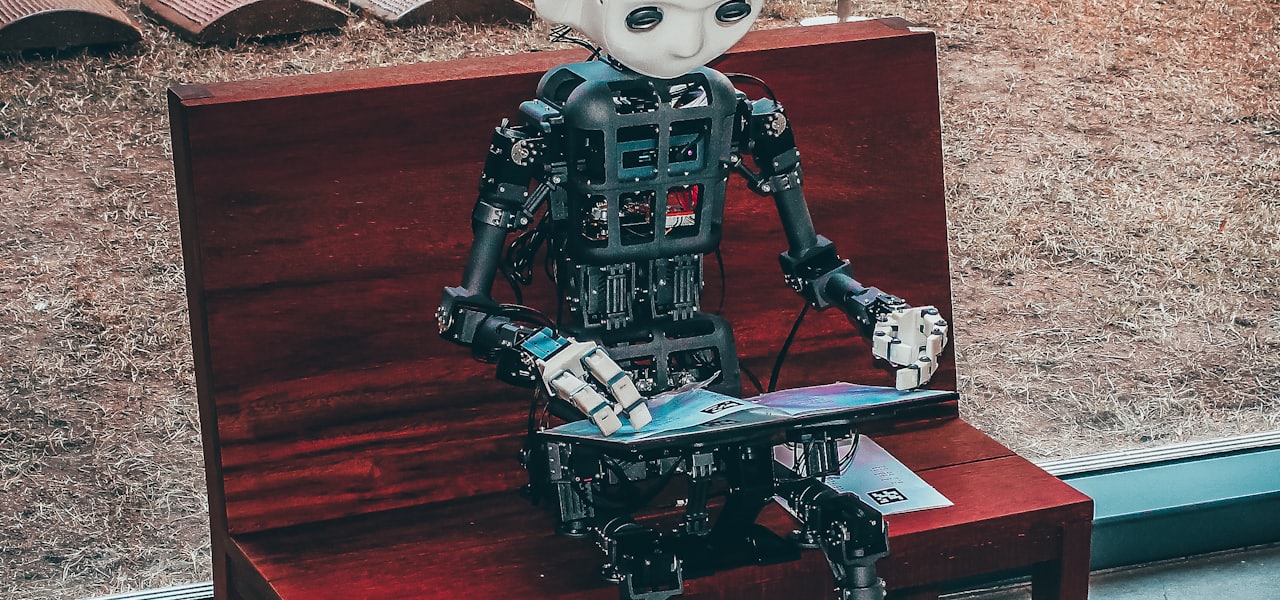
Cognitive robotics or cognitive technology is a subfield of robotics concerned with endowing a robot with intelligent behavior by providing it with a processing architecture that will allow it to learn and reason about how to behave in response to complex goals in a complex world. Cognitive robotics may be considered the engineering branch of embodied cognitive science and embodied embedded cognition, consisting of robotic process automation, artificial intelligence, machine learning, deep learning, optical character recognition, image processing, process mining, analytics, software development and system integration. == Core issues == While traditional cognitive modeling approaches have assumed symbolic coding schemes as a means for depicting the world, translating the world into these kinds of symbolic representations has proven to be problematic if not untenable. Perception and action and the notion of symbolic representation are therefore core issues to be addressed in cognitive robotics. == Starting point == Cognitive robotics views human or animal cognition as a starting point for the development of robotic information processing, as opposed to more traditional artificial intelligence techniques. Target robotic cognitive capabilities include perception processing, attention allocation, anticipation, planning, complex motor coordination, reasoning about other agents and perhaps even about their own mental states. Robotic cognition embodies the behavior of intelligent agents in the physical world (or a virtual world, in the case of simulated cognitive robotics). Ultimately, the robot must be able to act in the real world. == Learning techniques == === Motor Babble === A preliminary robot learning technique called motor babbling involves correlating pseudo-random complex motor movements by the robot with resulting visual and/or auditory feedback such that the robot may begin to expect a pattern of sensory feedback given a pattern of motor output. Desired sensory feedback may then be used to inform a motor control signal. This is thought to be analogous to how a baby learns to reach for objects or learns to produce speech sounds. For simpler robot systems, where, for instance, inverse kinematics may feasibly be used to transform anticipated feedback (desired motor result) into motor output, this step may be skipped. === Imitation === Once a robot can coordinate its motors to produce a desired result, the technique of learning by imitation may be used. The robot monitors the performance of another agent and then the robot tries to imitate that agent. It is often a challenge to transform imitation information from a complex scene into a desired motor result for the robot. Note that imitation is a high-level form of cognitive behavior and imitation is not necessarily required in a basic model of embodied animal cognition. === Knowledge acquisition === A more complex learning approach is "autonomous knowledge acquisition": the robot is left to explore the environment on its own. A system of goals and beliefs is typically assumed. A somewhat more directed mode of exploration can be achieved by "curiosity" algorithms, such as Intelligent Adaptive Curiosity or Category-Based Intrinsic Motivation. These algorithms generally involve breaking sensory input into a finite number of categories and assigning some sort of prediction system (such as an artificial neural network) to each. The prediction system keeps track of the error in its predictions over time. Reduction in prediction error is considered learning. The robot then preferentially explores categories in which it is learning (or reducing prediction error) the fastest. == Other architectures == Some researchers in cognitive robotics have tried using architectures such as (ACT-R and Soar (cognitive architecture)) as a basis of their cognitive robotics programs. These highly modular symbol-processing architectures have been used to simulate operator performance and human performance when modeling simplistic and symbolized laboratory data. The idea is to extend these architectures to handle real-world sensory input as that input continuously unfolds through time. What is needed is a way to somehow translate the world into a set of symbols and their relationships. == Questions == Some of the fundamental questions to be answered in cognitive robotics are: How much human programming should or can be involved to support the learning processes? How can one quantify progress? Some of the adopted ways are reward and punishment. But what kind of reward and what kind of punishment? In humans, when teaching a child, for example, the reward would be candy or some encouragement, and the punishment can take many forms. But what is an effective way with robots?